How Did the New Deal Change the Federal Government?
4 min read
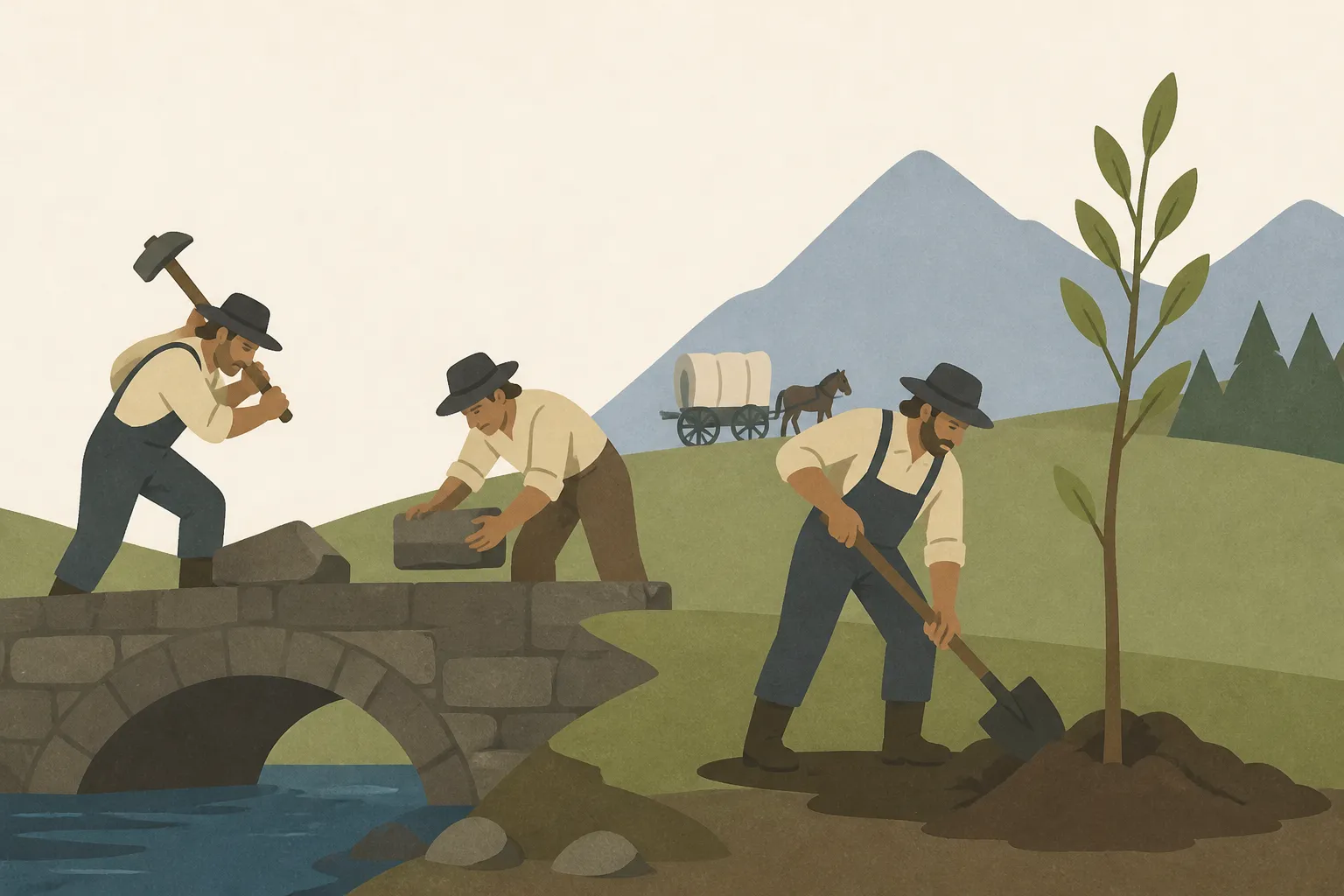
The New Deal was the group of programs and reforms that Franklin D. Roosevelt and Congress created in the 1930s to deal with the Great Depression. Before the New Deal, most Americans expected little of the federal government in daily life. After it, Washington had a larger role in the economy, in regulating banks and business and in providing a basic safety net. The scale of that change is what makes the New Deal a turning point.
What was the problem?
By 1933 about a quarter of American workers were unemployed, thousands of banks had failed and many farmers could not pay their debts. President Herbert Hoover had taken some steps, but they were seen as too limited. Roosevelt, elected in November 1932, took office in March 1933 and promised "a new deal for the American people."
What happened in the first hundred days?
In his first months, Roosevelt and Congress passed a flood of laws. The Emergency Banking Act helped stabilize banks, and the Glass-Steagall Act of 1933 created the Federal Deposit Insurance Corporation, which insured bank deposits so people would not rush to withdraw their money. Other measures created agencies to relieve hunger and joblessness. The Tennessee Valley Authority built dams and power plants to bring electricity and development to a poor region.
What were the main programs?
The New Deal is often described as having three goals: relief, recovery and reform.
- Relief: the Civilian Conservation Corps (CCC) employed young men to plant trees and build parks, and the Works Progress Administration (WPA), created in 1935, employed millions to build roads, schools, bridges and also to support artists and writers.
- Recovery: the Agricultural Adjustment Act paid farmers to cut output and raise prices, and the National Industrial Recovery Act tried to set industry codes.
- Reform: the Securities and Exchange Commission began regulating stock markets, and the Social Security Act of 1935 created old-age pensions and unemployment insurance. The Wagner Act of 1935 protected the right of workers to organize unions.
How did it change the federal government itself?
The federal government grew in size and reach. Agencies regulated banking, securities, labor relations and agriculture. The government accepted a role in managing the economy and in providing a safety net. The executive branch gained power as Roosevelt's administration set up many new agencies, and Washington began to give direct help to individuals and communities, which had been left to local governments, charities and families.
What were the limits and the criticisms?
The Supreme Court struck down parts of the program, including the National Industrial Recovery Act in 1935 and the Agricultural Adjustment Act in 1936. In 1937 Roosevelt proposed adding more justices to the Court, a plan that failed and cost him political support. Conservatives said the New Deal gave government too much power and debt. Others on the left said it did too little. Many programs also excluded or treated unfairly Black workers, since farm and domestic workers were left out of Social Security at first, and some agencies practiced discrimination.
Did it end the Depression?
Unemployment fell during the 1930s, but it stayed high, and a new recession in 1937 and 1938 set the recovery back. Historians and economists disagree on how much the New Deal helped. Many agree it improved conditions and restored confidence, while the large spending of World War II finally brought full employment.
Why does it still matter?
Many institutions from this period, including Social Security, deposit insurance and federal securities regulation, remain central to American life. The arguments over the role of government that began in the 1930s continue today. The Depression itself, and its causes, are covered in what caused the Great Depression, and the New Deal's promise of rights is part of a long story that includes why Reconstruction ended in 1877.
Who ran the New Deal?
Roosevelt surrounded himself with a mix of advisers, often called the "Brain Trust," and named a diverse cabinet that included Frances Perkins, the first woman to serve as a cabinet secretary, who led the Department of Labor and helped design Social Security. Eleanor Roosevelt acted as an advocate for the poor and for civil rights and traveled widely to report on conditions. Harry Hopkins ran relief programs, including the WPA. Their different approaches show that the New Deal was not a single plan but a series of experiments, some of which worked and some of which failed, adjusted in response to politics and courts.