What Caused the American Civil War?
4 min read
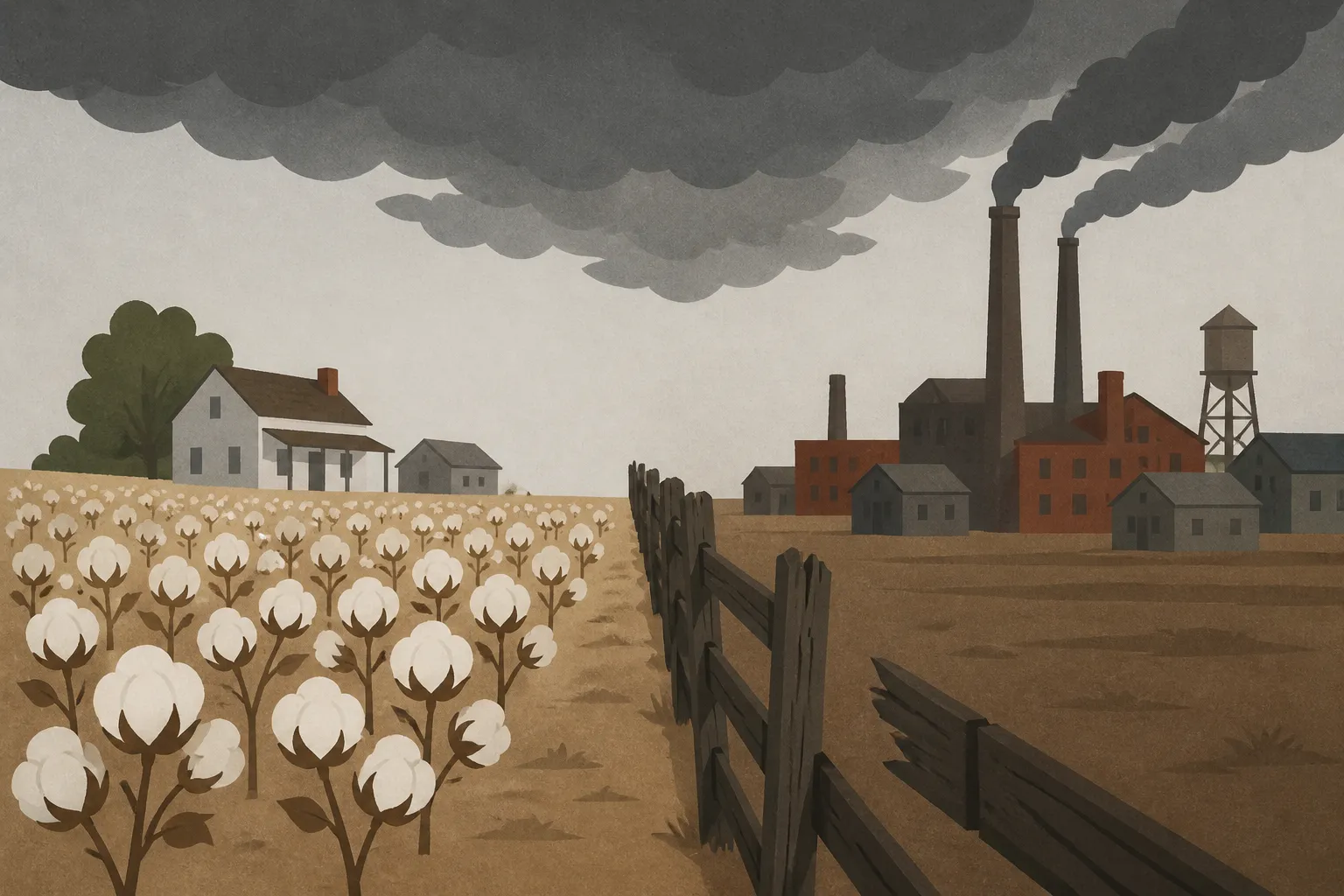
The American Civil War began in April 1861 when Confederate forces fired on Fort Sumter in South Carolina. The causes ran back decades. Historians debate the weight of different factors, but the central cause on which most scholars agree is slavery and the fight over its future. Understanding the war means looking at how economics, politics and a series of crises pushed the country apart.
Was it about slavery or states' rights?
The Confederate states' own statements give a direct answer. The declarations of causes issued by states such as Mississippi, Georgia, South Carolina and Texas said they were leaving the Union to protect slavery. After the war, many Southerners described the cause as "states' rights," but the right that mattered most in 1860 was the right to hold people as property and to extend that system into new territories. Alexander Stephens, vice president of the Confederacy, said in 1861 that the new government rested on the idea that the "negro is not equal to the white man" and that slavery was its "cornerstone."
How were the North and South different?
By 1860 the North had more factories, railroads and cities and a growing population, many of them immigrants. The South's economy was based on agriculture, especially cotton grown by about four million enslaved people, and the cotton trade made some slaveholders very rich. These differences were not themselves reasons to fight, but they made the sections feel they had different interests, and the political power balance in Congress became a prize.
What were the main crises?
A chain of events kept pushing the issue to the front.
- The Missouri Compromise (1820) tried to balance slave and free states, as described in the Missouri Compromise.
- The Mexican War (1846 to 1848) added new land and reopened the question of slavery in the territories.
- The Compromise of 1850 admitted California as a free state and passed a harsher Fugitive Slave Act, which angered many Northerners.
- The Kansas-Nebraska Act (1854) allowed settlers to vote on slavery and led to violence in "Bleeding Kansas."
- The Dred Scott decision (1857) said Black Americans could not be citizens and that Congress could not ban slavery in the territories.
- John Brown's raid (1859) at Harpers Ferry, an attempt to start an uprising, terrified slaveholders.
What role did politics play?
The old parties split. The Whig Party broke apart, and the new Republican Party, founded in the 1850s, opposed the spread of slavery into the territories. Abraham Lincoln, the Republican candidate, won the presidency in November 1860 without carrying a single Southern state. He promised not to end slavery where it existed, but Southern leaders saw his election as a threat to their future.
How did secession begin?
South Carolina left the Union in December 1860, and six more states followed by February 1861. They formed the Confederate States of America. Lincoln refused to recognize secession, and when he tried to resupply Fort Sumter, Confederate guns opened fire on 12 April 1861. Four more states then joined the Confederacy.
What did the Louisiana Purchase have to do with it?
The vast land bought in 1803, covered in what the Louisiana Purchase was, created the question of how to divide new land between free and slave labor. Each new state became a contest over the balance of power in Congress.
Did anyone try to prevent the war?
Many tried. Compromise proposals, such as the Crittenden Compromise, which would have protected slavery south of a line and extended it into new territories, failed in early 1861, because Republicans refused to allow the spread of slavery. A peace conference in Washington also produced no agreement.
How should we think about it?
A useful way is to see slavery as the issue that no compromise could resolve, because it involved a basic question about whether a nation based on liberty could allow human bondage and whether it could expand. The war's outcome ended slavery with the Thirteenth Amendment in 1865, but the struggle over rights continued, as shown in why Reconstruction ended in 1877. The roots of these divisions also lay in the compromises built into the founding, discussed in the Constitutional Convention.